
On the 7 and 8th of March we conducted our second Cyber Threat Detection and Response workshop for 2023. Our focus was on developing the “Human Firewall for organization.
The Human Firewall Training Program is a unique educational program designed to help individuals become their own cybersecurity guardians. This program was recently attended by a number of small and medium-sized enterprises (SMEs) in order to empower them with the knowledge and skills needed to protect their businesses from the various cyber threats present in today’s digital world. This blog post will explore the different topics that were discussed during the program and how they can benefit SMEs in protecting their assets.
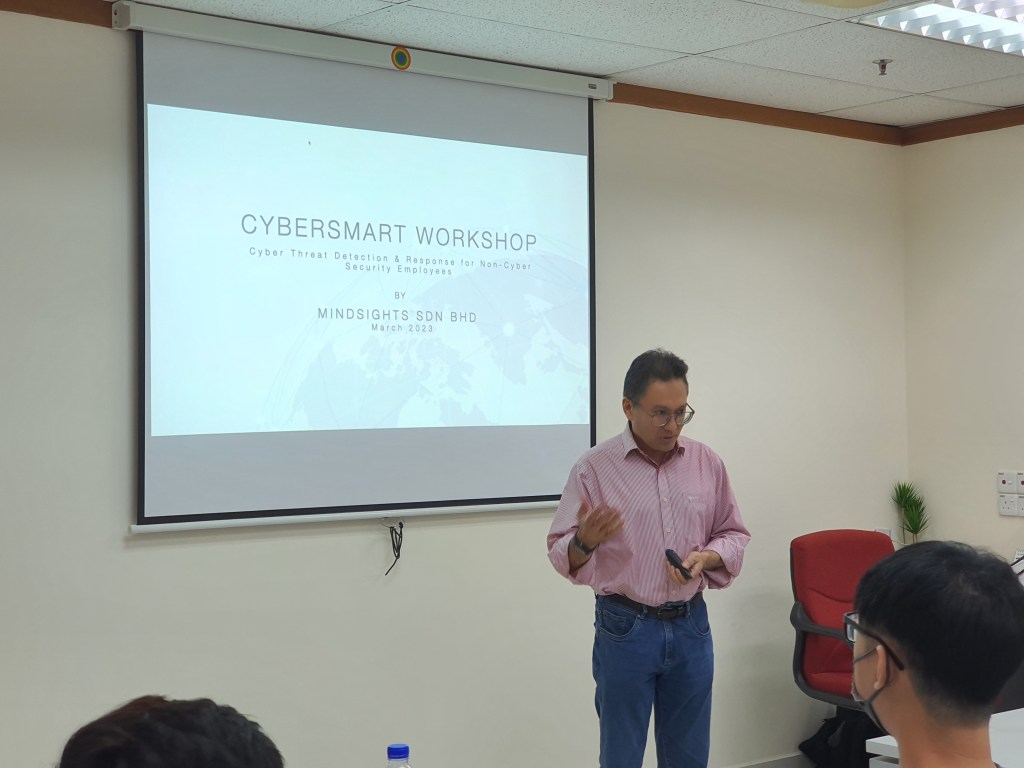
Overview of Human Firewall Training Program
The Human Firewall Training program consists of a number of topics tailored to help SMEs understand and protect themselves from cyber threats. It begins with sessions on basic cybersecurity concepts and terms, such as threats, attacks, vulnerabilities and preventative measures.
Following these, more specific topics are explored, such as the different types of malware, malicious activity indicators, understanding phishing attacks, and recognizing and responding the different persuasion techniques that hackers use. Finally, the program concludes with information on basic security practices and best practices by using monitoring tools such as Vigilante for protecting confidential and sensitive data.
Understanding the Threat Landscape
One of the most important topics discussed during the Human Firewall Training program was an overview of the current digital threat landscape. Attendees learned how to recognize common threats, including malware, ransomware, phishing, and social engineering attempts. They also gained an understanding of the various methods used by these attackers, and why they present such a danger to organizations. Additionally, SMEs learned how to identify malicious activity indicators, which can be used to spot signs of suspicious activity.

Responding to a Breach
Another important topic discussed during the program was how to respond to a potential breach. SMEs were taught methods for responding quickly and effectively to a security incident, such as conducting a thorough investigation and collecting evidence for further analysis. Additionally, attendees were informed about the importance of reporting a potential breach to the relevant authorities as soon as possible, as well as recognizing and addressing the potential for serious financial, legal and reputational risks.
Basic Security Practices
Finally, attendees of the Human Firewall Training Program learned basic security practices that should be implemented to help protect SMEs from potential cyber threats. These practices included using strong passwords, downloading the latest security patches and updates, installing anti-virus software, preparing for and executing appropriate backups, and implementing a plan for recovering data in the event of a ransomware attack. Additionally, SMEs were advised to follow general security guidelines, such as avoiding sharing confidential and sensitive data, keeping devices locked, and disabling security measures on public networks.
Conclusion
Attending the Human Firewall Training Program was a valuable experience for SMEs, as they learned important tips and best practices for protecting their businesses from cyber threats. The discussion of the different topics covered during the program, such as recognizing and responding to a breach and following basic security practices, can help these organizations safeguard their assets and avoid becoming victims of a cyber attack. As data security continues to become more important, programs like the Human Firewall Training Program can help SMEs stay safe in the digital age.
 Mindsights
Leave a comment