As I started my journey with Sustainability in 2015 (which I began to have an interest in designing food forests), I discovered a larger sustainability perspective provided by the United Nations Sustainable Development Goals (SDGs). The SDGs are a set of 17 goals adopted by the United Nations in 2015 that aim to end poverty, protect the planet, and promote prosperity for all.

One is the key elements of the SDG is the inclusivity and the protection of women’s rights. Several of the SDGs explicitly mention women’s rights, through gender and diversity, as important considerations for achieving sustainable development.
For example, SDG 5 calls for gender equality and the empowerment of all women and girls. SDG 10 focuses on reducing inequalities among countries by ensuring equal opportunities and reducing discrimination based on gender, age, disability, race, ethnicity, origin, religion, or economic status. Finally, SDG 16 seeks to promote peace, justice, and strong institutions, including by ensuring access to justice for all and promoting inclusive decision-making processes that involve diverse voices and perspectives.
In addition, other SDGs also recognize the importance of addressing gender and diversity issues in order to achieve their respective goals. For example, SDG 3 aims to promote the health and well-being of all people, including by addressing the specific health needs of women and girls, while SDG 4 focuses on providing quality education for all, including by ensuring equal access to education for girls and other marginalized groups.
Research has shown that countries with higher levels of gender equity – including women’s rights to economic resources, access to education and representation in political decision-making – have a greater likelihood of success in their economic, social and environmental goals. For example, countries that invest in girls’ education also have higher economic growth rates.
Furthermore, empowering women has a positive multiplier effect on other areas of development. When women are supported with access to education, healthcare, and equal participation in the economy, this can lead to better health and greater income for families and communities.
In addition, women are more likely to invest up to 90% of their income back into their families, and by doing so, help improve their families’ nutrition, health and education outcomes. Evidently, protecting women’s rights and providing them with greater access to resources and opportunities is essential to achieving sustainability.
Evidence show that empowering women has a positive impact to overall economy. According to a recent McKinsey report, closing the global gender gap in the workforce could add up to $28 trillion to global economic growth.
A study from The Peterson Institute for International Economics, companies with a higher percentage of female leadership have a 34% higher return on equity than companies with fewer women in leadership positions.
A 2018 report from the World Economic Forum found that if gender parity in the labor market were achieved, global GDP would increase by $5. 3 trillion by the year 2025.
There has been some significant movements in addressing the gender gap globally. The World Bank, for example, has committed $2. 6 billion to support women entrepreneurs in developing countries, to help them gain access to finance, markets, and technology.
In 2020, the Kingdom of Saudi Arabia lifted its ban on women driving, opening up new economic opportunities for women in the country. The UK government has introduced a new mandatory gender pay gap transparency reporting requirement, forcing employers to disclose and address any gender pay gaps within their organizations. In Indonesia’s Ministry of Women’s Empowerment and Child Protection launched the Program for Women’s Business and Financial Independence, an initiative designed to help women develop their entrepreneurial skills and access financial resources.
Malaysia is also taking a number of steps to improve gender equality and inclusiveness in the workplace. In 2018, the Ministry of Women, Family and Community Development launched the “Nurturing Women and Children in the Digital Age” policy, which aims to enhance the digital skills of women and children, promote gender equality in the labor market, and increase women’s access to digital technologies.
The government has also established the National Women’s Entrepreneurship Initiative, with the aim of increasing the number of women entrepreneurs by 30% by 2021. Additionally, the Ministry of Human Resources rolled out several policies in 2018 to promote gender diversity and workplace protection for women, including the Gender Equity and Human Resources policy, which requires employers to take into consideration any gender-based imbalances in the recruitment process.
Overall, the importance of addressing gender and diversity issues is undeniable in order to achieve sustainable development.
In conjunction with International Women’s day, take part in this meaningful celebration and join us at
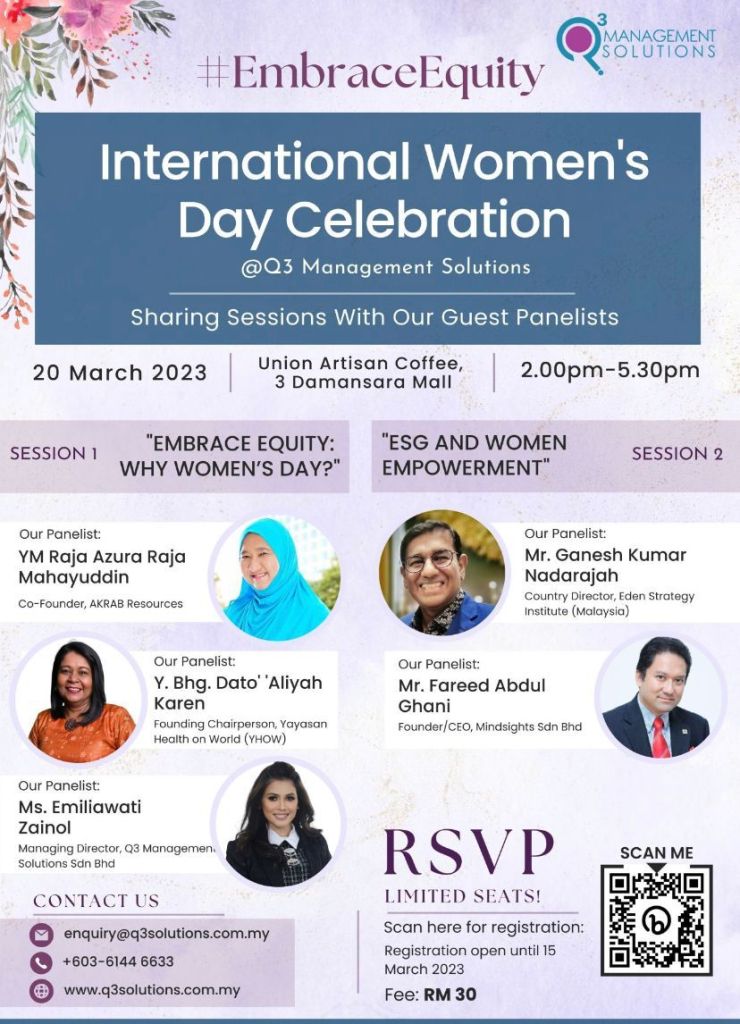
Union Artisan Coffee in Petaling Jaya on the 19th March 2023 from 2. 00pm – 5. 30pm, with tickets starting at only RM30 and all other expenses covered; however, spots are limited!
Secure your reservation by clicking the link below.
and join the conversation!

 Mindsights
Leave a reply to Changing the Narrative on ESG Development in Malaysia – How We Can Move from Good to Great – Mindsights Cancel reply